A little plug for The Master’s Seminary

Pastoral ministry brings new and exciting challenges every day, but I’ve never regretted my time at The Master’s Seminary. My four years in their MDiv program laid an important foundation in theology, preaching, pastoral skills, Christian character, Bible survey, and biblical languages.

One incoming student recently wrote:

I want to attend The Master’s Seminary because I know that God has called me to become a pastor and I feel the heavy responsibility to teach the word of God accurately and without compromise. I have looked at other seminaries and talked with alumni from those schools. The common theme among the other seminaries was that they had a curriculum that was broadly focused to prepare the student for many jobs in ministry, but they did not offer a theological education that focused on teaching the Word of God and preparing men to preach it. I want to attend TMS because I feel it will prepare me to know and teach the Bible and fulfill my ministry goal of becoming a pastor/teacher in a local church.

I used the TMS website to locate and contact alumni of TMS and asked them to honestly tell me how they felt the school had prepared them for the positions of ministry that God has currently placed them in. The response was very positive and each former student that I talked with said that they felt that God had used their time at TMS to prepare them theologically and spiritually for the work of the ministry and, without exception, each asked if they could pray with me about God’s direction in my life. That was the type of answer I was looking for and the kind of minister I want to become.

I couldn’t agree more. Master’s has a high academic standard and their MDiv program specializes in one thing: producing teachers and preachers of God’s Word.

But is the cost too high? It may not be easy, but when God places a call on your life, you can be assured He will provide the means to obey it. And you may be encouraged by this chart:

There are several great seminaries out there today, but if you’re looking for a place to get thoroughly equipped for pastoral ministry, I cannot recommend The Master’s Seminary highly enough.

Two free audio books by John Piper

This month, you can get two audio books by John Piper for free. Thanks to christianaudio.com and Desiring God for these special deals. Here are the links:

Let the Nations be Glad: the Supremacy of God in Missions
(use coupon code GLAD10 at checkout; offer expires Dec. 31, 2010)

Summary: Why do we do missions? We are told, by Jesus, to preach the gospel and make disciples of all nations. So missions is duty, right? Wrong. If you do missions purely from a sense of duty you will not honor those you are reaching out to, nor will you truly honor God. Duty is the wrong place to look, so where do we find the answer to why we do missions? We turn, according to John Piper, to worship.

In our worship of God we encounter God’s glory. The overflow from our worship is a desire to share God’s glory with others (the chief end of man is to glorify God and enjoy Him forever), and we naturally become missional. When Jesus was asked what the kingdom of God was like, he compared it to a pearl so valuable that one would sell all they owned simply to possess it. Does that seem like duty to you? Instead, Jesus calls us to a new mindset, which flows from the mindset that worship creates in us. Thus, according to Piper, does worship become the goal of missions and the fuel which makes missions possible…

Don’t Waste your Life

Summary: Millions of people are wasting their lives pursuing dreams of happiness that don’t rise above a good marriage, nice kids, a successful career, a nice car, fun vacations, nice friends, a fun retirement, a painless death, and (hopefully) no hell. John Piper calls this a tragedy in the making. He argues that we were created for joy. We were designed to have one life-encompassing passion.

In this book he describes his own journey in discovering this great, single passion. And He pleads that at all costs we pursue our joy in the crucified Christ, who is the glory of God. The cost is great. But the joy is worth any cost. Don’t buy seductive, tragic promises of worldly joy. Don’t waste your life.

True treasure

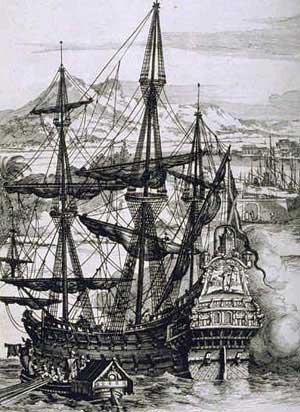
Many dream of “striking it rich,” but few actually succeed. Mel Fisher began his quest for riches in 1969. He started to search off the Atlantic Coast for the Atocha, one of the few remaining Spanish galleon shipwrecks never recovered. It was thought to contain a fortune.

For sixteen long years, using state of the art equipment, Fisher scoured the ocean floor for any sign of the ship. Finally, on July 20, 1985, his son Kane announced, “Put away the charts; we’ve found the main pile!” Their find was dubbed the “shipwreck of the century,” worth hundreds of millions of dollars, and has been compared to the discovery of King Tut’s tomb.

Did you know you, too, could strike it rich? I’m not talking about the lottery. The Bible says “Happy is a man who finds wisdom…for she [wisdom] is more profitable than silver, and her revenue is better than gold. She is more precious than jewels; nothing you desire compares with her” (Proverbs 3:13-15). Find wisdom, and you’ve hit the real jackpot.

Wisdom is the ability to make good and godly choices in life. It’s more than just an IQ. Wisdom is an attraction to everything good, and true, and beautiful. It is not driven by emotions. It carefully weighs each option. It acts responsibly. It thinks about long-term consequences. It is street-wise in a dangerous and confusing world. Imagine how different things would be if we all spoke and acted with wisdom!

So, how do we find wisdom? Proverbs 9:10 provides the treasure map: “The fear of the LORD is the beginning of wisdom, and the knowledge of the Holy One is insight.” To gain wisdom we must first develop a healthy fear and respect for the living God.

This means we must recognize that God alone is pure and powerful, able to tell us how life works. We must admit our own sense of direction is faulty. We must believe God’s Word is more reliable than our closest friend, our smartest professor, or our favorite talk show host. We must accept that Jesus alone can rescue us from our sin, for “in Him are hidden all the treasures of wisdom and knowledge” (Colossians 2:3).

True wisdom begins with the fear of the Lord. And the fear of the Lord begins with knowing Christ. Only then can we become truly rich. Even richer than Mel Fisher.

This article was written for publication in today’s edition of our local paper, the Hi Desert Star.

When was Passover?

I administer an online Life of Christ class through The Master’s College DEEP Program, and recently had a student ask this question. I thought this subject would probably interest many others too.

I’m a bit confused about which day the Passover happened: Thursday or Friday of Passion week, and just want to make sure that I’m understanding it correctly. On Thursday afternoon, the disciples were sent to request the upper room, and likely the lamb was slain that day. When sundown came, it was Friday (by a Jewish understanding), and the Passover was eaten at this time (correct?)…I guess the question enters in when reading John 18:28, clearly in the midst of Jesus’ trials, when John writes that the Jews did not enter Pilate’s Praetorium “in order that they might not be defiled, but might eat the Passover.” This makes it sound like Passover was to be eaten Friday evening (or Saturday, by the Jew’s understanding).

Here was my reply:

Jesus’ disciples must have sacrificed their lamb Thursday afternoon and eaten the meal together on Thursday night. Many other Jews went to the temple on Friday afternoon and ate their meal Friday at sundown. So the Lamb of God would have died just as thousands of lambs were being slaughtered in the temple.

There have been many proposed solutions to the discrepancy between John and the Synoptic gospels, but newer research seems to show two different nights that the Jews would celebrate the Passover meal.

Robert Thomas, in his Harmony of the Gospels, explains in detail:

The Jews of Jesus’ day apparently recognized a dual method of reckoning dates. In addition to the better known system which regarded each new day as starting at sundown, the policy of some was to reckon from sunrise to sunrise. Each of these customs finds support from the OT, the former in such places as Gen. 1:5 and Ex. 12:18 and the latter in Gen. 8:22 and 1 Sam. 19:11.

The system of reckoning used by Jesus and His disciples and described by Matt., Mark, and Luke was from sunrise to sunrise. John describes the events from the perspective of a sunset-to-sunset reckoning. Indications are that the difference in systems was also a point of disagreement between the Pharisees (sunrise to sunrise) and the Sadducees (sunset to sunset).

The synoptic accounts therefore see Jesus as eating a Passover meal the evening before His crucifixion. For those who followed the sunrise-to-sunrise reckoning, the Passover lambs had been slain a few hours earlier, in the afternoon. For them the slaughter took place on the 14th of Nisan, as did the Passover meal. The 15th did not begin until the next morning, Friday, at about 6:00.

The Johannine description, however, views the events from the standpoint of the Sadducees who controlled the Temple. Jesus was crucified at the normal time of killing the Passover lambs, that is, the afternoon of Nisan 14. Nisan 14 had begun at sunset Thursday and would not end until sunset Friday. This was the normal time for the lambs to be slain, but the Temple authorities had apparently compromised with those who followed the other calendar and allowed them to slay the lambs on Thursday afternoon. This difference explains why Jesus’ accuser had not yet eaten the Passover (Jn. 18:28). They were about to do it Friday evening, Nisan 15, which began at sunset.

If the above solution is correct (and it is impossible at this point to say dogmatically that it is, but it does seem to handle all the data more effectively than other proposals), then Jesus was crucified on Nisan 15 according to the sunrise-to-sunrise reckoning and on Nisan 14 according to the sunset-to-sunset method. (appendix 10, pp. 321-22)

Peter Walker hints at this also in In the Steps of Jesus:

There are clear suggestions in John’s Gospel…that Jesus’ crucifixion took place during Nisan 14 (not 15) – around the time when the Passover lambs were being slaughtered in the nearby Temple.

That may be part of John’s point (Jesus, he was implying, was now the true Passover lamb). Yet it would also have made sense historically for Jesus to celebrate it 24 hours early. Conceivably this altered schedule brought Jesus into line with other Jewish groups (the Essenes or Pharisees), who may have been operating on different calendars. Yet the main reason may have been starkly practical: Jesus knew that, if he waited another 24 hours, it would be too late. He would be dead. (p. 156)

At our church’s last communion service, I preached on 1 Corinthians 5:7 and found this whole connection between Christ and Passover to be quite amazing. Down to the tiniest detail, our Lord pointed to the importance and blessing of His substitutionary death.

Thoughts on Life and Leadership