Free Shepherd’s Conference audio

The Shepherd’s Fellowship has opened up their Shepherd’s Conference and Resolved Conference media vault. Hundreds of past sessions and seminars are now all available for FREE DOWNLOAD. All you have to do is sign up for a free member account. Way to go, Shepherd’s Fellowship!

It’s also not too late to register for the 2009 Shepherd’s Conference. I’m really looking forward to going back this year.

HT: Tim Challies

A Bible for every age and reading level

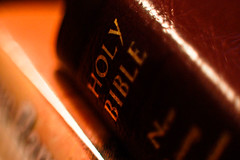
As a follow-up to yesterday’s post on daily Bible reading, I think it would be good to say something about Bible translations.

Personally, I prefer reading from my New American Standard Bible, but I would not recommend everyone to jump right into this version. For some readers, its heavy, literal style would feel awkward and wooden, and might actually discourage daily Bible reading.

If someone is younger, or relatively new to reading the Bible, I would encourage them to start with a more readable translation, then gradually work toward a more literal, advanced-level translation.

Here’s a recommended list of English Bible translations for every age level:

Young children:
The Jesus Storybook Bible
The Big Picture Story Bible
(We started using these Bibles even before our children were a year old. We love using them for family devotions!)

Beginning readers:
Egermeier’s Bible Story Book
NIV Adventure Bible

Intermediate readers:
New International Version
The New King James Version
(both considered 7th grade reading level)

Adult level readers:
English Standard Version (around an 8th grade reading level)
New American Standard Bible (10th grade reading level)

It’s not that there’s anything super-spiritual about reading a Bible that is more advanced. God always intended the Bible to be read by the common people. In fact, He chose for the New Testament to be written in the koine, i.e. common, Greek instead of the more sophisticated classical style Greek.

Nevertheless, I believe that “formal equivalent” translations like the ESV and NASB best reflect the original languages of the Old and New Testament, and thus are most accurate for in-depth Bible Study. When I read these translations, I feel confident I’m hearing God speak with the words and grammatical emphases He intended. It’s the next-best thing to reading from the original languages.

December 2010 Update: I’m becoming more impressed with the Holman Christian Standard Bible (HCSB), and have been giving it a “test drive” from the pulpit this month. With the Apologetics Study Bible, HCSB Study Bible, and a 2009 revision, I believe this translation has really matured and gone more mainstream. Here’s a paper by Dr. Bill Barrick showing the exegetical accuracy of the HCSB. 

October 2011 Update: After sixteen years with the NASB and another year trying out the Holman Bible, I’ve made a permanent change to the ESV for personal Bible reading and our ministry at First Southern Baptist Church. This was not an easy decision, but the ESV is a great translation and has tons of study resources available. Click here to read more reasons I made the switch.

May 2024 Update: I continue to read and preach mainly out of the ESV. Having recently taken a pastorate at Calvary Church West Hills, I’m still learning which translations are most familiar to my congregation, and what will be best moving forward. I have updated a couple recommendations and links in this article since some availability has changed since the time of writing. Some Amazon affilitate links are in this article.

Photo credit: univrsltransl8r

Daily devotions

I highly recommend for everyone to read through the Bible in a daily, systematic way so they will be exposed to the “whole council of God” (Ac. 20:27).

One of the greatest ways to do this is to follow one of the many “Bible in a year” reading plans. I personally like this one produced by Discipleship Journal.

Someone recently asked me how to balance between daily Bible reading and more in-depth, personal study of God’s Word. Here’s their question:

“How do you balance between the yearly reading plan that the church is doing and your own personal studies? I’m trying to do a daily devotional, which is only a couple of minutes, and read through the Bible in chronological order this year. They both are only a few minutes a piece, but they seem to be conflicting.”

Here was my response:

Great question. I don’t have a simple answer for this. It’s something that I struggle with also. But here are a few suggestions:

1. Try to integrate your personal study into your yearly reading plan. I’m trying to do this in 2009. I want to learn more about the theology of suffering. So, each day, I’m reading the Bible with particular interest in anything the Bible has to say about suffering and how believers should pray and respond. I am recording short prayers in my journal that reflect what I’m learning.

2. Have separate times for chronological reading and devotional reading. Maybe read your devotional book in the morning, and your yearly reading plan on lunch break, or in the evening at home.

3. If you follow the Discipleship Journal reading schedule, you have one day per week you could use for personal study, along with a couple extra days at the end of the month. I must admit I usually need that extra day of the week just to catch up on any reading that I am behind, so this system would not work very well for me personally.

4. Alternate your yearly reading plan with in-depth study. Try reading the whole Bible in two years instead of one, and then alternate each month between in-depth study and your chronological reading of Scripture.

I believe reading the whole Bible is important, since “Scripture interprets Scripture” and context is the #1 rule of Biblical interpretation. However, it is good to pause regularly to look at the individual “trees” and not just the big “forest.”

Hope this helps a little. I praise God for your passion for His Word!

Photo credit: House of Sims

25 reasons the sign gifts have ceased

Are “sign gifts” like tongues, prophecy, miracles, and healing still available for Christians today? If not, then how do we explain when miracles still seem to occur?

Here are 25 reasons my theology professor, Dr. Craigen, gives that the sign gifts have ceased. There is some overlap here, and some arguments are stronger than other, but there’s a tremendous amount of weight when seeing all these reasons together:

  1. The apostles and prophets were at the ‘foundation stage’ of the church (Eph. 2:20).
  2. Signs and wonders were clustered around the apostolic ministry (2 Cor. 12:12).
  3. The sign gifts confirmed new revelation (Jn. 14:11).
  4. The closed canon of Scripture (Rev. 22:18-19) calls into question if supernatural confirmation is still needed.
  5. Even the Apostle Paul and others seemed to experience a ‘fade-out’ of miracles (e.g., Phil. 2:27).
  6. The church is never exhorted to copy the signs and wonders of Christ and the apostles.
  7. A new healing paradigm is given in James 5:14-20 for the local church.
  8. Working miracles “at will” passed off the scene.
  9. A focus on God’s providence in church and individual lives.
  10. History shows only three periods of significant miracles: Moses, Elijah/Enoch, and Jesus/Apostles.
  11. The Word of God is fully sufficient without further confirmation.
  12. The preaching of the Word draws forth reaction/response (John 6).
  13. Rejoicing at salvation was considered better than casting out demons (Lk. 10:17-20).
  14. The preaching of the truth is cognitively/rationally grasped.
  15. The New Testament miraculous gifts were conferred upon the disciples of Jesus.
  16. Pentecost was unique (an abundance of miracles would minimize this watershed event).
  17. No apostles today means there was no conferral of miracles beyond the original twelve.
  18. False messiahs and false signs and wonders can and will arise (Mt. 24:24).
  19. The use of Jesus’ name falsely can and will occur (Mt. 7:15-23).
  20. The idea of being ‘slain in the Spirit’ is a type of activity never attested in Scripture.
  21. If miracles become the norm, then they are no longer miracles.
  22. Prophecy and tongues went out when the ‘mature church’ came online (1 Cor. 13:8-13).
  23. Joel 2 and Acts 2 relate the Day of the Lord and the Millennial Kingdom, so it was partially fulfilled at Day of Pentecost.
  24. The Word of God does what raising the dead cannot do (Lk. 16:19-31).
  25. The Gospel has power in itself to save without signs and wonders (Rom. 1:16-17).

Photo credit: hickory hardscrabble

Sanctity of Life Sunday

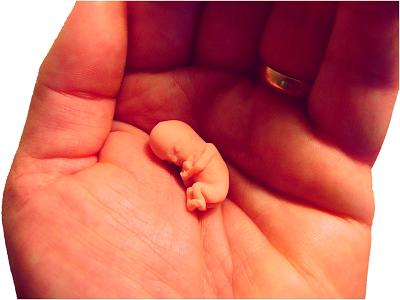
This Sunday is “Sanctity of Human Life Sunday,” when many Americans pause to celebrate the dignity of all human life made in God’s image (Gen. 1:27).

Did you know that since 1973, nearly 50 million legal abortions have occurred in the U.S.? On average, women give at least three reasons for choosing abortion: 3/4 say that having a baby would interfere with work, school or other responsibilities. About 3/4 also say they cannot afford a child. And 1/2 say they do not want to be a single parent, or are having problems with their husband or partner.

Learning of an unplanned pregnancy can be a frightening and confusing experience, especially for a young teen, a single mom, or a couple who are struggling financially. Life and death decisions are often made when emotions are running high. It’s important for local churches and pro-life pregnancy clinics to provide these people with compassionate care and advice when they need it most.

Here are some other heartbreaking statistics about abortion:

  • 22% of all U.S. pregnancies end in abortion.
  • More than 23% of legally-induced abortions in the U.S. are performed in California. (About 15% of the nation’s population live in the state.)
  • Black women are more than 4.8 times more likely than non-Hispanic white women to have an abortion.
  • 88% of all abortions in the U.S. happen during the first trimester, prior to the at 13th week. 52% of all abortions occur before the 9th week of pregnancy.
  • The total number of abortions across the whole world in one year is estimated to be 42 million.

**If you, or someone you know, is considering an abortion, please visit this link, or call 1-800-395-HELP for confidential counseling**

Thoughts on Life and Leadership